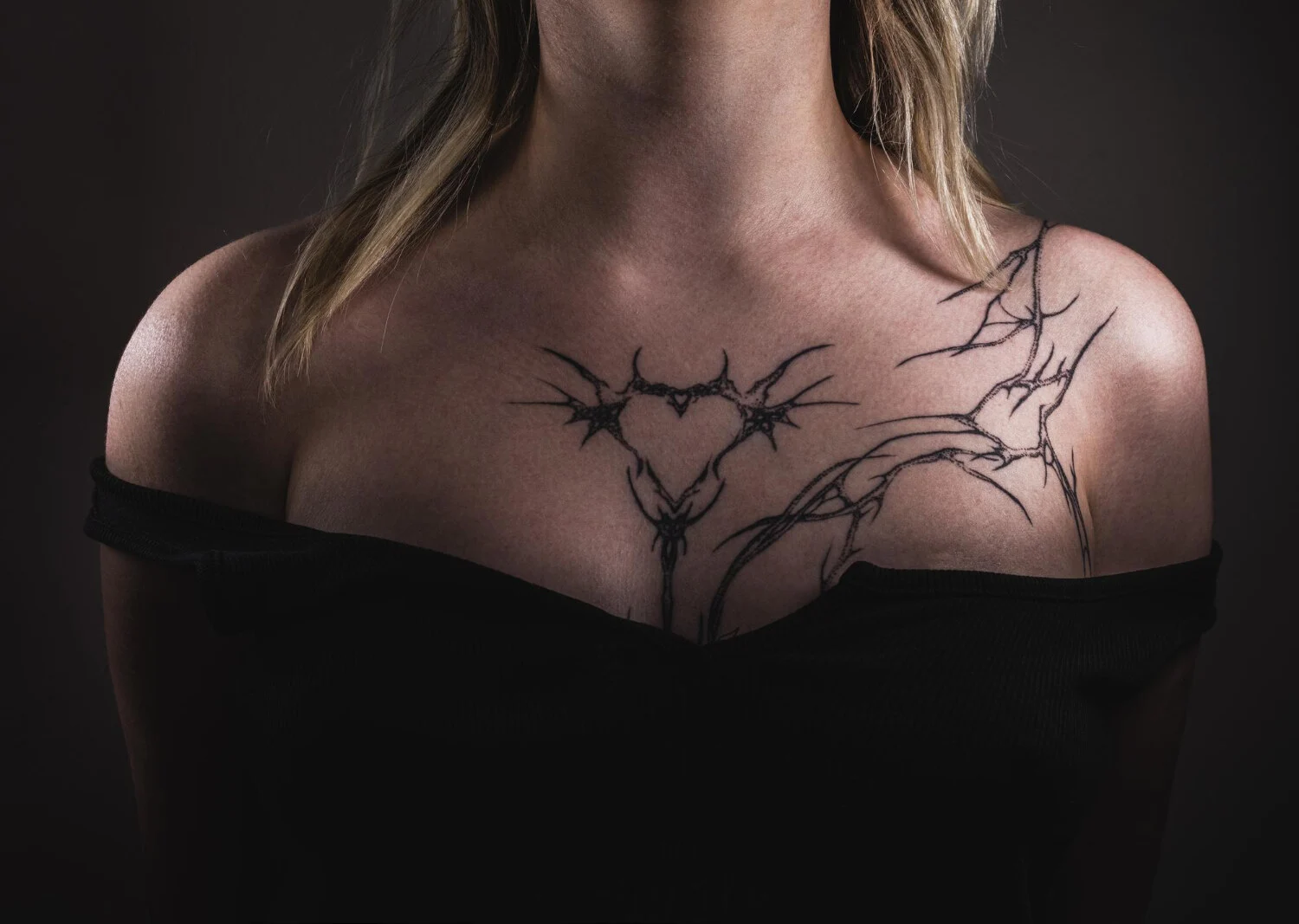
Some accessories complete the outfit, while others become the signature of your style. Tattoos for many people play exactly this role: when placed in the right place, with the right measure and style, they look like a natural part of the look. That's why the choice of placement is not just about "where looks nice." Visibility, proportion, daily use, and how it will appear in the long term are considered together.
The practical approach that simplifies the placement decision is as follows: decide in advance whether the tattoo will be a focal point or a "complementary" detail within the outfit. The same design gives a completely different message in a different area.
Basic criteria that work for most people when choosing placement:
Desire for visibility in daily life (work, social environment, photos)
Intersection with clothing (collar, sleeve length, skirt/short line)
Body line and proportion (areas that make you look taller, draw attention upward)
Ease of friction and maintenance (watch, belt, bag strap, tight clothing)
Possibility of change over time (weight fluctuation, skin elasticity, sun)
These criteria are not "rules"; they form a framework that helps organize the mind when making a choice. Now let's move on to the most popular scenarios that combine placement with your style.
Tattoos That Create Jewelry Effect: Designs in Bracelet, Ring, and Necklace Form
Tattoos in the form of jewelry create a strong impact with a small detail. A line that fits the arm like a bracelet, a minimal pattern that sits around the finger in the form of a ring, or a composition that gives a necklace feel on the collarbone line... The most critical issue in such placements is that the design does not look "imitated" and flows naturally with the body.
The most preferred areas for designs that give a jewelry effect:
Areas close to the wrist (bracelet form)
Around and on top of the finger (ring form)
Collarbone line and chest top (necklace form)
In such works, sizing is very decisive. A bracelet design chosen too thick may choke the wrist; if chosen too thin, it may look pale from a distance. Designs in the ring form tend to soften more quickly due to friction and washing habits. In the necklace form, the central alignment is important; even a few millimeters shift can create a "crooked" feeling.
The table below speeds up the placement selection in jewelry-form tattoos:
Design Form | Most Suitable Area | Visibility | Things to Pay Attention to |
Bracelet | Arm line close to the wrist | High | Use of watch/bracelet and friction |
Ring | Around the finger / on top of the finger | High | Washing-friction, softening of the detail |
Necklace | Collarbone / chest top | Medium-High | Alignment with collar line, symmetry |
The "less but right" approach gives better results in works with the jewelry effect. Too much detail can disrupt the jewelry form and make the design look cluttered. When choosing a tattoo in these sections, the best result is obtained by drawing the design according to the body line; adapting to the measurements instead of copying a ready illustration as-is makes a difference.
Clothing Combinations and Tattoo Harmony: Aesthetic Figures in Neckline Areas
When it comes to neckline areas, tattoo placement directly speaks to the neckline form of the clothing. Therefore, the question here is not "which figure looks beautiful," but "how will it look with which neckline." The same tattoo looks long and elegant on a V-neck top, while it can appear more symmetrical and balanced on a square-neck piece.
The logic that works when choosing aesthetic figures in neckline areas:
V-neck: Vertically flowing, single-focus figures look more harmonious.
Square neck: Symmetrical and horizontally balanced designs look more natural.
Strapless / spaghetti strap: Fine compositions following the collarbone line stand out.
Shirt collar: Designs that elevate too much may be lost in some combinations; those that remain more in the middle line are more visible.
Negative space usage in these areas makes the design "breathe." Especially very full and densely shaded works can look heavy on the neckline. Cleaner lines, fewer elements, and the right amount of space increase harmony with the clothing.
There is also a practical reality: the neckline area often appears in photos. This is an advantage for those who love visibility; but it's something to watch for those who want a more "controlled" appearance. Therefore, the best approach in the neckline area is for the design to remain readable both up close and from a distance.
Tattoos by Season: Strategic Areas Displayed in Summer, Hidden in Winter
Placement selection is often considered along with the seasons. There are those who want to choose an area more visible in summer with pieces like t-shirts, shorts, and dresses; and those who prefer an area that is easier to hide in winter. This preference is not just about visibility. Sun exposure, friction, and ease of maintenance also come into play.
In areas more visible in summer, two things become important: sun exposure and the wear and tear of being constantly exposed. In areas hidden in winter, friction (thick clothing, coats, sweaters) and skin dryness may become more prominent. Therefore, although the idea of "display in summer, hide in winter" is nice, if the area's daily conditions are not considered, unexpected results may occur.
Strategic areas more easily displayed in summer:
Forearm and areas close to the wrist
Outer part of the upper arm (visible with short sleeves)
Front/side lines of the leg (visible with shorts and skirts)
Strategic areas more easily hidden in winter:
Inner part of the upper arm
Ribs and side lines of the body
Upper part of the back (easily hidden with clothing)
The aim here is not to "hide" or "show," but to control. For example, if there is sensitivity about visibility in work life, areas like the upper arm that can be covered when needed might be a safer choice. On the other hand, for someone who loves the tattoo being visible, areas like the forearm may be more satisfying.
A small but important note in this section: to maintain the appearance of the tattoo in the long term in areas constantly exposed in summer, developing a sun protection habit is necessary. Otherwise, even the best craftsmanship can fade over time.
3 Common Mistakes in Tattoo Placement Decision
These mistakes complicate placement selection and can lead to dissatisfaction later on:
Choosing an area just because it "looks nice" without considering your wardrobe
Placing a very small design on a too wide area and losing its impact
Placing a design with very intricate details in a high-friction area
The best method to avoid these mistakes is to consider the outfits worn most often in daily life and size the design according to the chosen area.
Sometimes, the placement or style choice may no longer suit the person years later. In this case, the options are not just "give up completely or leave it as is"; solutions like cover-up that transform the design into a more modern composition can make the appearance more satisfying.
Frequently Asked Questions (FAQ) About Tattoo Placement Suggestions
How to Choose Tattoo Placement?
When the desire for visibility, clothing style, and daily usage habits are considered together, the placement becomes clearer.
Where is the Best Area for a First Tattoo?
Those who want concealment and ease of maintenance generally find controlled areas like the upper arm more comfortable.
Is Getting a Tattoo on the Wrist Sensible?
The wrist is advantageous in terms of visibility; however, since friction and sun exposure may be higher, it is important to choose a design that is clear and proportionate.
Do Neck and Collarbone Tattoos Attract Much Attention?
These areas frequently intersect with the clothing collar line, hence they may be more visible. Minimal and balanced designs look more natural.
In Which Area Do Tattoos Deteriorate the Least?
Areas with less movement, low friction, and minimal sun exposure generally appear more stable; however, the suitability of the design to the area is determining.
