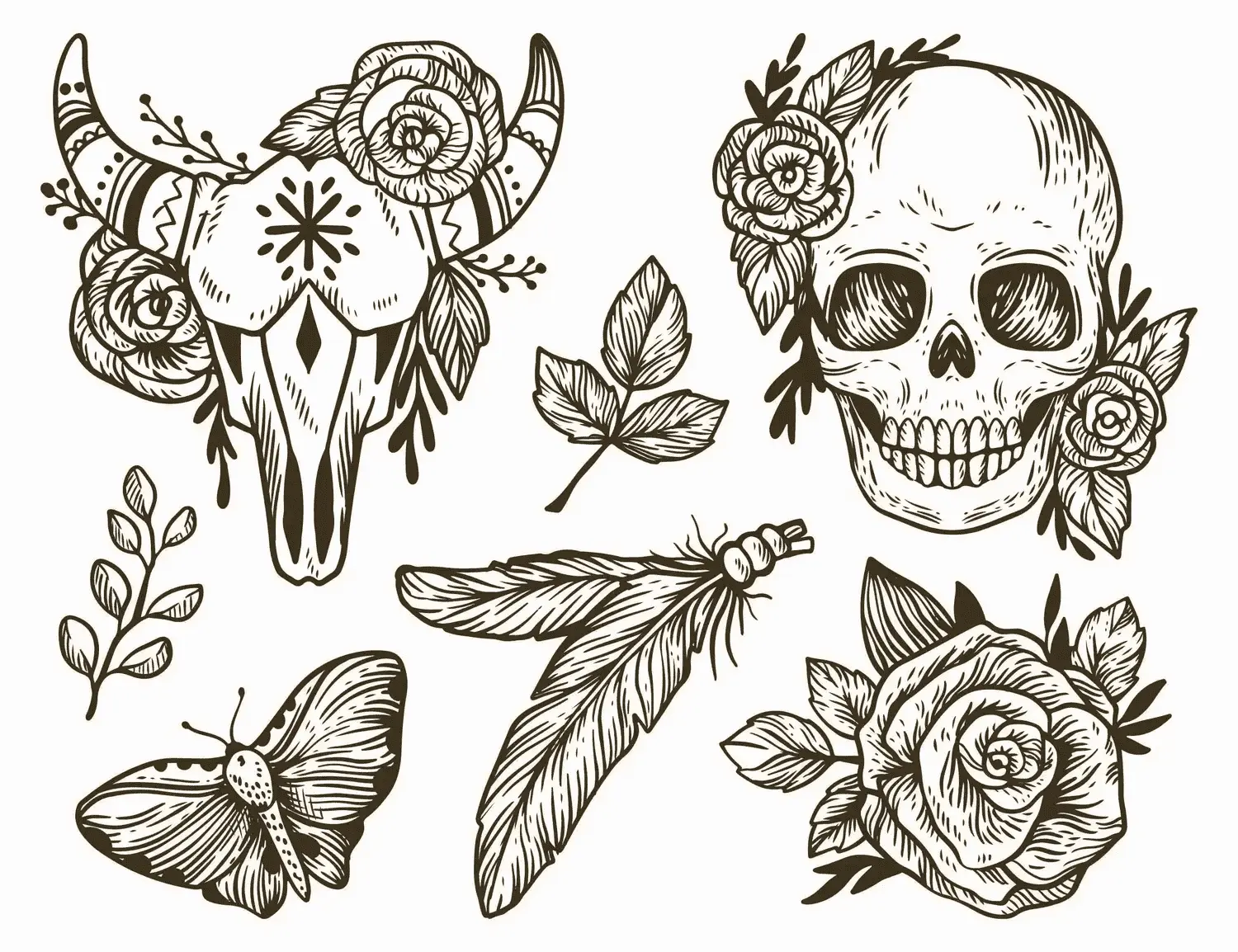
Old school tattoo, or also known as American traditional, is a traditional tattoo style with a simple yet very powerful aesthetic. If you are entering the world of tattoos for the first time, this style becomes the first tattoo choice for many people. The main features of this style:
Thick, clear black contours,
A limited color palette; usually red, yellow, green, blue, and black,
Minimal shading, more “flat” color blocks,
Simple and iconic designs easily recognized even from a distance.
This simplicity is both a technical and aesthetic choice. Considering the old machines, pigments, and healing conditions, this style was developed to keep tattoos clear over the years.
History of Old School Tattoo: A Style Born at Sea
The roots of old school tattoos date back to the 19th and early 20th centuries, when sailors brought tattoo traditions they saw in the Pacific to the west. Over time, these motifs combined with American culture to achieve the classic look we know today.
During this period:
Sailors and soldiers get tattoos in studios in port cities.
Motifs typically carry themes like courage, belonging, luck, and love.
Artists like Norman “Sailor Jerry” Collins play a major role in shaping this style.
Today, when you say “old school,” you are also touching this historical heritage.
Distinctive Features of Old School Tattoos
There are a few clues that make you say “This is definitely old school” when you look at a tattoo:
Thick Black Lines
Contours appear thick, clear, and confident. Thus:
The tattoo can be read even from a distance
Lines maintain their form even if they spread and slightly thicken over the years
Limited but Strong Color Palette
In old school tattoos, generally:
Red, yellow, green, blue, and black are used.
Colors are vivid and saturated, with minimal transitions and effects.
This ensures the tattoo looks “timeless.”
Simple and Iconic Design
Old school designs:
Do not go into complex details.
Use strong symbols that are “understood at a glance.”
Usually have minimal shading, forms are clear and drawn with a graphic language. This clear and graphic language provides a comfortably readable appearance in both small and large-scale tattoo works.
Most Common Old School Motifs and Their Meanings
Of course, each artist's interpretation is different, but there are certain classic motifs that are like the signature of this style.
Swallow: Journey, return, loyalty. Represents safe return to home for sailors.
Anchor: Safety, stability, grounding. Used commonly to represent the things that keep one anchored in life.
Rose: Love, beauty, also encompasses pain and passion.
Eagle: Power, freedom, courage. Carries patriotic meanings especially in America.
Dagger: Danger, betrayal, also symbolizes protection and determination. Can represent “heartbreak” or difficult love stories when combined with a heart.
Skull: Inevitability of death, also sends a message to hold tightly to life.
Pin-up girls: Sexuality, attractiveness, confidence. Drawn with an old-fashioned poster aesthetic.
How Does Old School Differ from Neo Traditional and Modern Styles?
Let’s briefly compare old school with other styles to make it clearer in your mind.
Old school (American traditional):
Thick contour, limited color, minimal shading, clear symbols.Neo traditional:
A style that modernizes old school by incorporating more colors, more intense shading, and more detailed drawings.Realistic / fine line / minimal:
Thin lines, soft shadows, work that is close to photographic or extremely simple linear.
If you want a classic, poster-like, timeless, and “Old but cool” vibe, old school could be for you. If you prefer a more experimental, detailed and modern air, you might consider neo traditional or realism.
Things to Know Before Getting an Old School Tattoo
Let's think entirely from the practical side for this part.
Choosing the Right Artist
Although it may seem like every tattoo artist can do old school, this style has its own rules. Keep these questions in mind:
Does their portfolio really have old school work?
Are the lines clear, colors full, and the designs “intact”?
Can you see how their old works have aged over the years?
Old school, while technically simple, actually requires excellent line and color control. Additionally, if you want to refresh or hide your old tattoo, working with an artist experienced in cover-up provides a great advantage.
Colors and Skin Tone
Because it uses a limited palette:
If your skin tone is warm, reds and greens pop beautifully.
On very fair skin, the contrast looks sharper.
Areas more exposed to the sun (back of hand, neck, outer calf) fade more quickly over time
Make sure to discuss these with your artist.
The Most Flattering Areas on the Body
Of course, it's a personal choice, but old school tattoos generally:
Arm (especially upper arm, forearm)
Leg (calf, thigh)
Chest and back
look very good on broad surfaces. The graphic impact of this style desires a bit of “poster” space, so it sometimes cannot reveal itself in small and cramped areas.
Long-Term Advantage of Old School Tattoos
Many people choose old school for how it will look in the long term.
Thick lines accommodate slight spreading over time.
Limited and strong colors, even if faded, leave a “soft” and readable image rather than a “dirty” one.
Simple forms do not lose their meaning even when details are lost.
Therefore, if you want it to remain readable years later and age well, the old school style has a significant advantage here. When you want to transform an old job you don't like over the years, old school designs are often preferred for cover-up thanks to their strong forms.
Is Old School Tattoo Right for You?
You can ask yourself these questions:
Do you love classic, nostalgic, and timeless things?
Do you want to see clear, strong symbols in your tattoo?
Do you enjoy work that is colorful but not overly detailed?
Is it important for your tattoo to remain readable even 10–20 years later?
If you say “yes” to most, the old school style will likely suit you well.
Old school tattoo is a tattoo style that combines history, symbolism, and aesthetics, defying time. If you choose the right artist and understand the meanings of the motifs before getting it, you'll create a piece that will accompany you visually and emotionally for many years.
Frequently Asked Questions (FAQ) on Old School Tattoo
How Much Do Old School Tattoo Prices Cost?
Old school tattoo prices vary depending on the studio you choose, the experience of the artist, and the size and color of the tattoo. They are generally calculated based on hourly rates, and it's always best to get an offer from the artist after finalizing the drawing and the area.
Do Old School Tattoos Hurt?
Old school tattoos hurt like other tattoos, but this pain varies depending on the area and your pain threshold. Because thick contours are used, you may feel a bit of intense burning while lines are drawn; most people describe it as tolerable.
How Long Does It Take For Old School Tattoos to Heal?
Old school tattoos usually shed their scabs within 2–3 weeks and the initial healing is complete. It's good to consider an average of 4–6 weeks for full settling and clarity of colors.
Do Old School Tattoo Colors Fade Over Time?
Yes, like all tattoos, old school tattoo colors fade slightly over time due to sun exposure, skin type, and care habits. Using sunscreen, keeping the skin moisturized, and taking care during the initial healing period helps colors stay vibrant longer.
What's the Best Area for Old School Tattoo?
For old school tattoos, and upper arm, forearm, calf, and chest are preferred for old school tattoos. These areas ensure motifs appear clear and show the form less distortion compared to other areas over time.
