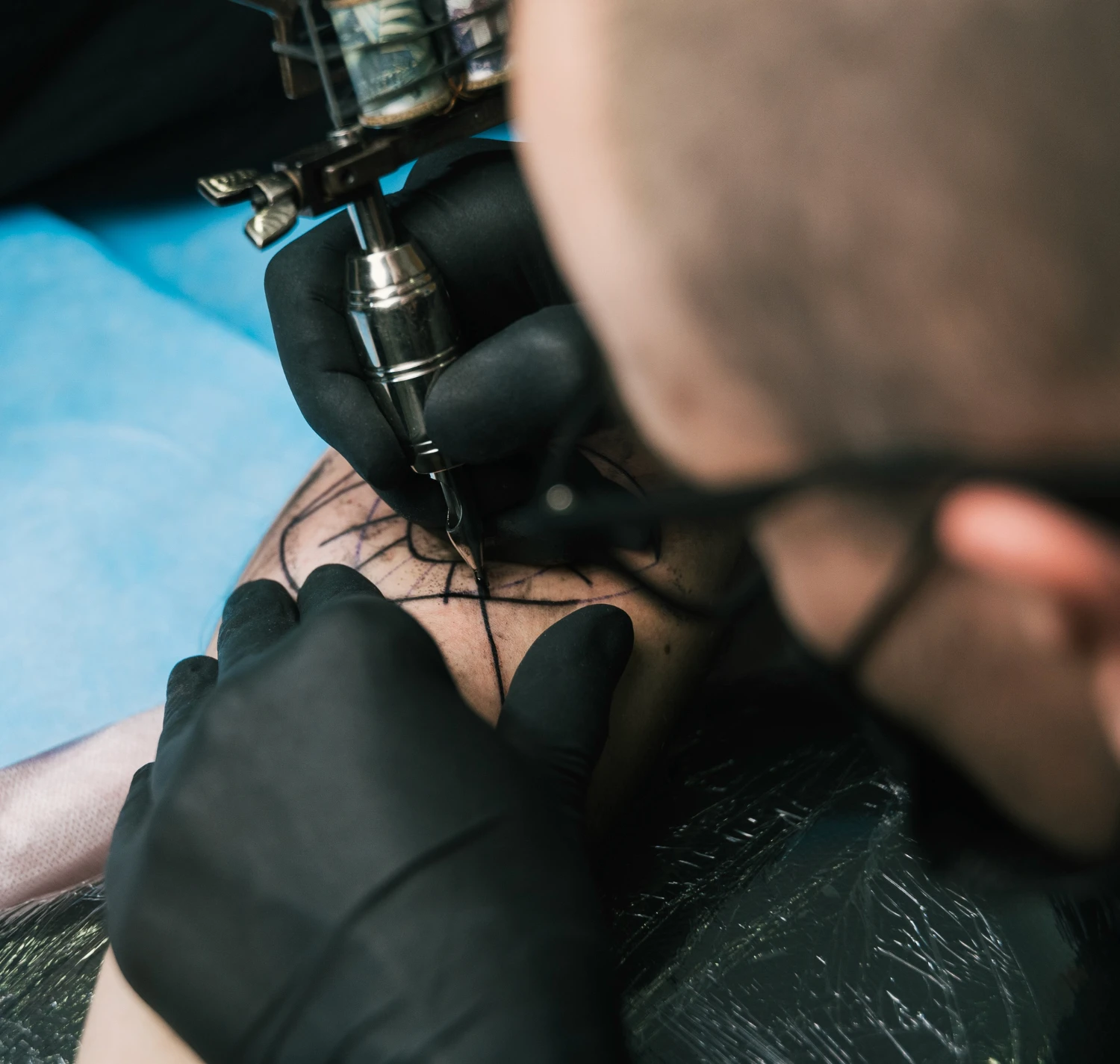
Tattooing with the needle you hold in your hand actually determines the character of the tattoo. Even with the same machine and the same dye, lines may appear thicker, shadows dirty, and colors irregular due to incorrect needle selection. Therefore, you must first think, "What kind of tattoo am I doing?" and then choose the needle.
In minimal and fine tattoos, fine liner needles with fewer needles are generally used; these needles deliver more elegant results in areas such as small writings, symbols, and the inside of the wrist. In writing tattoos, the thickness of the letters determines the liner choice; you can opt for fewer needles in fine fonts and more needles in bold fonts. Liners are also used for contour lines; thicker liners provide a stronger outline in old-school or traditional styles.
At the shading stage, where tone and transition are more important than lines, shader and round magnum needles stand out. Shaders are used in small shadows, while round magnums make it more comfortable to work on large areas and portraits. In large areas like back or shoulders where you paint the entire background, wide magnum needles shorten the time and distribute the pigment more evenly. In traditional, tribal, and geometric tattoos, thick liners or flat needles help achieve strong and bold lines. In short, the healthiest approach is to first choose the style and area, and then select the appropriate needle.
What Are Tattoo Needle Types?
Understanding tattoo needle types will make it easier for you to choose the right needle and decipher what codes like "3RL, 5RS, 9M1, Bugpin" mean. Each needle type adds a different character to line, shadow, and fill.
Round Liner (RL) is a needle where the tips are tightly clustered at the end and is used for lines and contours. The more needles, the thicker the line becomes, and the contour looks more solid. Round Shader (RS), with a similarly round arrangement, is looser and designed for shading and smooth transitions. Magnum (M1, M2, RM) needles are lined up side by side and used for wide-area filling and shading; round magnums, with their curved tips, sit more softly on the skin.
Flat (F) needles are arranged in a single row; they work well for hard, thick lines and some filling techniques, especially in traditional and tribal styles. Bugpin needles are of finer diameter, offering advantages in detailed and soft realistic work because they leave smaller pigment dots. Cartridge needles, which have a cartridge form, are disposable, hygienic, and practical, making them a favorite of many artists today. Once you know this basic logic, every code on the box easily tells you the arrangement, thickness, and ideal usage area of the needle.
How Deep Does a Tattoo Needle Go?
The depth at which a tattoo needle enters the skin determines both the permanence of the tattoo and skin health. If the needle goes too deep, unnecessary trauma and blowout risk increase; if it remains too superficial, the tattoo fades quickly. Therefore, knowing the correct needle depth is one of the fundamental techniques you need to know.
Which Skin Layer Should a Tattoo Needle Reach?
The skin consists of three layers: epidermis, dermis, and fat tissue. The targeted area for permanence is the dermis layer.
Generally, the ideal depth is about one to two millimeters in most people. At this depth, the pigment remains permanent while the skin doesn't suffer excessive damage.
Why Is Ideal Tattoo Needle Depth Important?
If you work superficially, the ink stays in the epidermis, the color fades as the skin renews itself, and lines lighten.
If you go too deep, the ink spreads into the fat tissue, bleeding increases, and the risk of blowout and scarring rises. Therefore, correct depth is crucial for both aesthetic and health reasons.
How to Control Tattoo Needle Depth?
You need to consider not just numerical measurements but also your hand habit and the skin's response.
Needle Projection: The needle visible from the machine should not disappear completely when pressed against the skin. Most artists aim for the needle to enter about one to two millimeters with each stroke.
Skin Tension: If you stretch the area you're working on sufficiently, the needle progresses more controlled, and the line-shadow settles more cleanly.
Adjustment Based on Area: The thickness and feel of the skin differ in areas like arm, rib, hand, foot; sometimes you need to lighten your touch, and at other times apply a bit more pressure.
Machine Feel: With experience, the sound, vibration of the machine, and the skin's reaction start offering insights about depth.
Short Tip for Beginners
If you're new, start working lighter and more controlled. Learn to adjust your hand to the area gradually by following signs such as excessive bleeding, ink flowing out, or the pigment not settling with a single pass.
The tattoo needle should go around one to two millimeters into the skin, and the dye should be left in the dermis layer. By maintaining this balance, you produce cleaner and more permanent work while protecting the skin from unnecessary damage.
What Is the Speed of a Tattoo Needle per Minute?
The speed of the needle while tattooing is directly connected to the quality of the line and the impact the skin receives. If the speed is too low, lines appear dirty and disconnected; too high, the skin appears more irritated, and blowout risk increases. This speed refers to how many times the needle moves up and down per second or minute.
How Is Tattoo Needle Speed Measured?
Tattoo needle speed is usually:
Hz (Hertz / CPS): Number of strokes per second
Strokes per Minute: Total number of strokes in one minute
Many professional machines are efficiently used in the range of approximately fifty to one hundred fifty strokes per second or three thousand to nine thousand strokes per minute.
What Should the Tattoo Needle Speed Be?
There's no single "correct speed"; your machine, needle group, job, and hand style determine this setting. In general:
Fine Line and Detail: Lower – medium speed, more controlled and clear line
Shading: Medium – slightly high speed, more comfortable ink flow and soft transitions
Large Color Fills: Medium – high speed, for filling larger areas faster and more evenly
The important thing is that the speed aligns with your depth and hand speed.
Relationship Between Speed, Voltage, and Machine Setting
The voltage you use directly determines the speed of the machine. As voltage increases, the motor accelerates, and the needle hits more frequently; as it decreases, the number of strokes drops.
Typically, a bit more dynamic for liner work and a softer voltage for shading and shader jobs is preferred. However, not every machine responds the same way at the same voltage; hence, you should evaluate the manufacturer's advice, your own hand speed, and the skin's reaction together.
What to Consider When Adjusting Tattoo Needle Speed?
Machine Sound: Excessive crackling, aggressive sounds often indicate excessive voltage or incorrect settings.
Skin Reaction: Excessive bleeding, fast swelling, and tearing feeling indicate that depth or speed/voltage might be too high.
Appearance of Line: Disconnected and dull lines usually indicate insufficient speed/voltage, while excessively aggressive lines point to excessive settings.
Your Hand Speed: Fast hand + low machine speed can result in the pigment not settling properly, while slow hand + high speed can cause unnecessary hits on the same point.
The speed of the tattoo needle per minute should be considered together with your machine's capacity, voltage setting, and working style. Rather than a single fixed number, finding the most suitable range with minor adjustments according to the skin's reaction is the healthiest approach.
How Is the Tattoo Needle Adjusted?
The adjustment of the tattoo needle is based on aligning the needle projection, depth, machine speed, and voltage to be compatible with one another. The correct setting directly affects both the quality of the tattoo and skin safety. In professional work, needle projection generally is kept around one to two millimeters.
Preparing the Machine
Make sure the needle or cartridge you use is compatible with the machine.
Secure the grip and tube or cartridge holder firmly.
Check that the needle moves comfortably back and forth without snagging.
The goal is to obtain a non-wobbly and stable setup.
Adjusting Needle Projection
Needle projection is the amount of needle visible from the machine.
Most artists aim for the needle tip to protrude about one to two millimeters from the tube tip.
This ensures that when you press against the skin, the needle passes the epidermis and reaches the dermis but doesn't descend into the fat tissue.
Establishing Depth Logic
If you're working "by sliding the tube," you'll descend to the set depth as you touch the tube tip to the skin and progress with standard pressure.
At a more advanced level, you may prefer to slightly extend the needle outward and control the depth with your hand, but this requires experience.
The goal is for the dye to settle in the dermis layer with each stroke.
Balancing Voltage and Speed
As voltage increases, the motor accelerates, and the needle hits more frequently and forcefully.
Too high voltage results in harsh entries into the skin; too low voltage causes insufficient hits and weak lines.
Base the recommended voltage range on the manufacturer and make fine adjustments according to your style:
More dynamic for liners,
Softer settings for shading and soft work.
Micro Adjustment According to Skin Type
In thin and sensitive areas (inside of the wrist, neck, hand), it is necessary to lighten the pressure and depth.
On areas like the back, shoulder, calf where the dermis is thicker, you can work a little deeper.
A good indicator is an intense but not exaggerated color at the end of the line, slight pinpoint bleeding, and no surrounding spread.
Testing Before Application
If you're using a new machine or a different needle group, first test lines, shadows, and fills on surfaces like synthetic skin.
Adjust the needle projection, voltage, and hand speed based on these tests.
When you set up the machine stably, adjust the needle projection around one to two millimeters, balance the voltage and speed suitable to your style, and make small adjustments according to skin type, you'll work more controlled and notice a visible difference in line, shadow, and color quality.
Frequently Asked Questions About Tattoo Needles (FAQ)
Can Tattoo Needles Be Reused?
Disposable tattoo needles should definitely not be reused. It is mandatory to use new, sterile, and unopened needles for each operation, both from a hygiene and legal responsibility standpoint.
Why Is Skin Type Important When Choosing a Tattoo Needle?
Each skin type responds differently to needle strikes. While needle groups that cause less trauma are preferred for thinner and sensitive skins, more powerful and fuller needle combinations deliver more controlled results for thicker skins.
What Hygiene Rules Should Be Considered When Using Tattoo Needles?
Needles should be disposable, packages opened in front of the client, gloves should be used constantly, and the work area should be regularly disinfected. All consumables used should be disposed of according to medical waste rules.
How Do Tattoo Needles Affect Ink Flow?
The needle group, arrangement, and diameter directly affect the flow rate and density of the ink into the skin. Incorrect needle selection can cause the ink not to settle sufficiently or to spread excessively.
Which Tattoo Needle Groups Are More Suitable for Beginners?
Beginners can work more controlledly with medium-thickness liner and basic magnum groups. Developing hand skills with balanced options rather than extremely thin or thick needle groups is safer.
