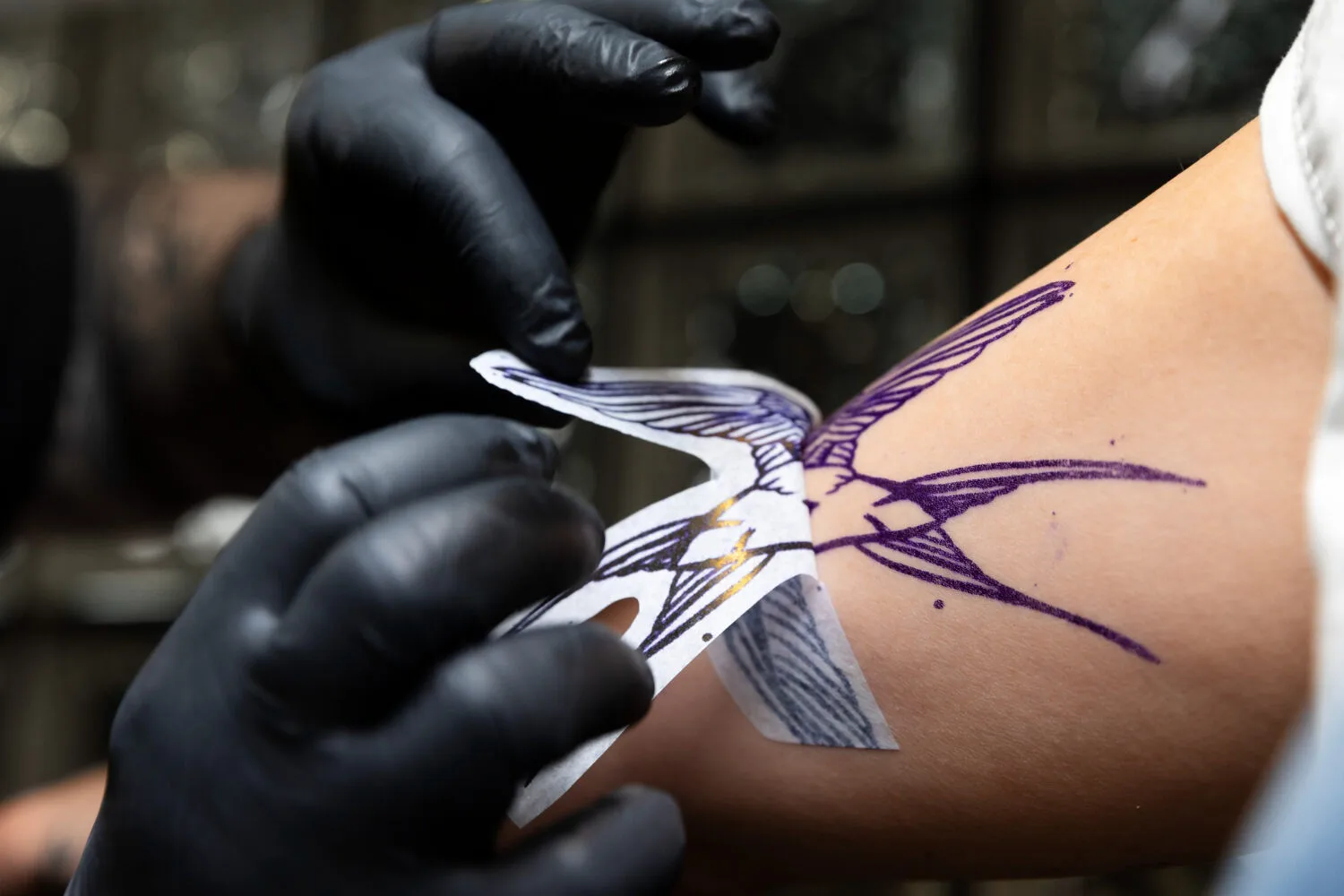

The history of tattoos is a broad story that cannot be reduced to a single geography or a single "first moment". Since ancient times, people have seen the body as a kind of expression area. Sometimes for identity, sometimes for status, sometimes for protection and religious rituals, marks were made on the skin. What is sought today as the "origin of tattoos" is actually a combination of several different types of evidence: the tattoo mark itself, the tools used in making tattoos, period narratives, and cultural transmission.
To accurately read the history of tattoos, it's necessary to separate two points:
Firstly, direct evidence like the mark left on the skin. Secondly, indirect evidence that comes with written sources or illustrations. This distinction explains why there cannot be a single definitive answer to the question "when was the first tattoo discovered?"
Why Did Tattoos Emerge?
Tattoos have not always been done for the same purpose. Even in the same geography, their meaning has changed over the centuries. Yet, when looking at the history of tattoo culture, some common motivations come to the fore:
Belonging and identity: Used as a mark of tribe, community, profession, or group
Status and display of power: A symbol of thresholds like rank, achievement, or transition to adulthood
Faith and protection: Meanings like warding off evil, searching for healing, or talisman-like purposes
Aesthetic preference: Ornamentation, concept of beauty, body decoration
Memory and narrative: The desire to carry an event, loss, or word on the body
These motivations continue in different forms today. Even if modern tattoo trends change, the reason for getting a tattoo often stems from a similar need to "express oneself".
How Is Evidence Read in Tattoo History?
When talking about the history of tattoos, the expression "the oldest tattoo" can sometimes be confusing. Because "the oldest" could mean any of the following:
Finding the tattoo mark on the skin
Finding the tools used for making tattoos
Finding a written record or depiction describing tattoos
The uninterrupted transmission of the tattoo tradition to the present day
Therefore, in tattoo history research, distinguishing the types of evidence is always a healthier method.
A Brief Timeline of Tattoos by Eras
Prehistoric: Marks on mummies show that tattoos were applied very early
Ancient North Africa: Some findings indicate that tattoos might have a social response
Ancient-Late Antiquity: Tattoos are mentioned with different purposes in written sources
Middle Ages: While regressing in some regions, they continued traditionally in some cultures
Pacific Cultures: Tattoos are passed down from generation to generation as a ritual and identity piece
Modern Era: Techniques develop, styles diversify, turning tattoos into a common expression area
Type of Evidence | What It Tells | Why It Matters |
Direct evidence (mark on the skin) | Shows that the tattoo was really applied | The strongest answer to the question "Was there a tattoo?" |
Artifacts and material findings | Shows how the tattoo might have been made | Provides clues about technique and practice |
Written sources and depictions | May tell the social meaning of tattoos | Explains the question "Why were they made?" |
Cultural continuity | Shows how tattoos were transmitted from generation to generation | Strengthens the dimension of tradition and ritual |
Viewed in this framework, the history of tattoos carries both "when" and "why" questions simultaneously.
When Was the First Tattoo Found?
Regarding the question "When was the first tattoo found?" the most accurate approach is to talk about "the oldest known direct evidence." Because a new discovery can broaden the framework regarding history. Nevertheless, with today’s knowledge, there are strong examples showing that tattoos were applied in ancient times.
One of the Oldest Known Direct Evidence
One of the best-known examples is the prehistoric human remains found in the Alpine region, known today as "Ötzi." In this example, tattoo marks are seen as clusters of lines and dots in specific regions. This detail provides an important clue: Tattoo may not always be for "decorative" purposes. The fact that some marks are placed at certain points of the body also suggests a functional possibility.
What should be noted here is: Such finds are not the "first tattoo" but "one of the oldest known direct evidence." The origin of tattoos may be older than this; only the chain of evidence at hand appears clearer from this point.
Traces of Tattoos in Ancient Times
When discussing the history of tattoos, Ancient Egypt, Siberian steppe cultures, and Pacific islands frequently come up. Tattoo marks and depictions reminiscent of tattoos in Ancient Egypt show that tattoos had a meaning within society. In the Siberian steppes, examples, especially with figures close to the animal style, strengthen the aesthetic and symbolic side of tattoos.
In Pacific cultures, the concept of "tatau" points to the visual, ceremonial, and identity aspects of tattoos. Here, tattoos are often part of a transition ritual and have a social response. It is often said that the cultural transmission of this has influenced the spread of the word "tattoo" in world languages.
Why Doesn't the Question of the "First Tattoo" Shift to a Single Date?
There are three main reasons why there is not a single answer to this question:
Soft tissue finds from ancient times are limited
Some cultures left no written sources, and the transmission remained oral
Tattoo marks have not always survived to the present day due to preservation conditions
For this reason, "tattoo history" research is often an area that can be enriched with new findings.
How Was Tattoo Care Initially Done?
Today, when tattoo care is mentioned, certain products, routines, and hygiene rules come to mind. However, conditions were entirely different in the past. Yet, the basic logic hasn't changed much: A tattoo creates a controlled wound on the skin. This wound needs to heal without getting infected. Although the word "care" might not have been used in its modern sense in ancient times, there was a similar need in practice.
The Basic Logic of Tattoo Care in the Early Days
In historical periods, the post-tattoo process probably focused on three goals:
Protecting the open wound from dirt and friction
Preventing the skin from excessively drying out
Reducing the risk of infection
In line with these goals, oils, herbal mixtures, resins, and various wrapping methods may have been used in different geographies. Rather than saying "it was definitely like this," it is more realistic to think through "possible practices" based on the health knowledge and material accessibility of the time.
Reasonable Clues About Used Materials and Methods
When answering the question of how tattoo care was in the early times, it's important to proceed based on the daily life materials of that era. For instance, oils and substances similar to natural beeswax were suitable options for softening the skin and forming a layer against external factors. Since some plants are known to have a soothing effect, it is not surprising to find them in traditional applications.
The critical point here is: Old methods were not always safe. The tattooing environment, the reuse of tools, and the conditions of access to water could increase the risk of infection. Therefore, getting a tattoo in the past could have been a more risky experience compared to today.
The Difference Between Modern Care and Historical Care
The advantage of modern tattoo aftercare is standardization. Today, sterilization, the understanding of single-use materials, and routines supporting the healing process are clearer. In historical care, however, methods were based on local knowledge, climate, and materials. Therefore, it is more accurate to form a realistic framework instead of romanticizing when "old tattoo methods" and "old tattoo care" are described.
Why Is Tattoo History Still a Popular Search Topic?
Searches like "the history of tattoos" and "the origin of tattoos" stem not only from curiosity. A person who wants to get a tattoo often wants to know the cultural depth of what they will get. Additionally, even though tattoo trends change quickly, historical knowledge provides a timeless reference. Today's minimal tattoos and the marks of ancient times may look different, but the underlying behavior of "assigning meaning" is quite similar.
At this point, a practical perspective is useful for those interested in tattoo history: Tattoos are both an individual and social mark. When these two are considered together, tattoo culture becomes more understandable.
Frequently Asked Questions (FAQ) About Tattoo History
Where Did Tattoos First Appear?
There is no single point of origin for tattoos. It is more likely that they appeared in similar periods in different geographies.
When Was the First Tattoo Found?
The oldest known direct evidence extends to very ancient times. The term "first" may vary depending on the type of evidence.
Where Does the Word Tattoo Come From?
The word "tattoo" used today is associated with words like "tatau" in Pacific cultures and has spread among languages over time.
Who Made Tattoos in Ancient Egypt?
The social role of tattooing in Ancient Egypt varied according to periods. Some findings suggest that tattoos might have been prevalent among certain groups.
Were Tattoos More Permanent in Ancient Times?
Permanence depends on the technique used, the pigment, and the healing of the skin. Although some works remained permanent in ancient times, conditions were more variable.
