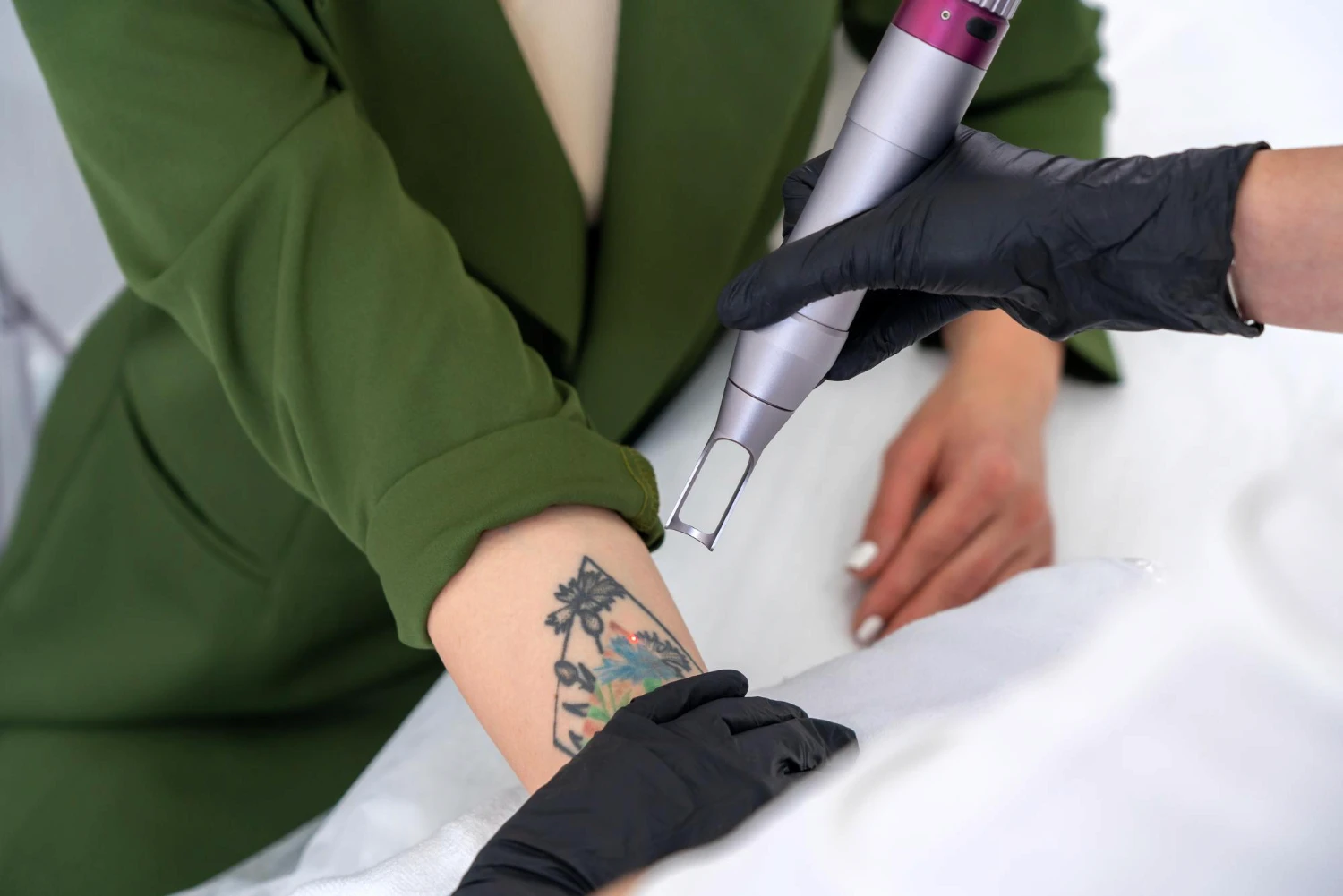
Tattoo removal is an aesthetic procedure aimed at significantly fading or completely eliminating an unwanted tattoo. The most commonly chosen method is laser tattoo removal, which is considered the "gold standard" today.
People may want to remove their tattoos for various reasons:
Changing aesthetic preferences over time
Job or occupational requirements
Old relationships or symbols that have lost meaning
Poorly done or deteriorated tattoos
What is Laser Tattoo Removal?
Laser tattoo removal is a procedure that uses high-intensity light energy targeting the tattoo pigments beneath the skin. This laser light breaks the tattoo ink into small particles; these small particles are then transported and removed by the body's immune system (particularly the lymphatic system and macrophages) over time.
The crucial points are:
The laser focuses directly on the tattoo pigment,
The surrounding tissues are protected as much as possible,
The result is not an instant "removal" but a gradual fading session after session.
How Does Laser Tattoo Removal Work?
In modern tattoo removal processes, Q-Switched or picosecond lasers are mostly used. These devices send out extremely short and intense pulses of light, similar to a billionth of a second, to break the ink particles through both heat and shockwave effects.
The mechanism works as follows:
The laser light targets the tattoo pigment.
Different wavelengths are more effective for different colors; for example, black ink absorbs certain wavelengths, while red-orange tones absorb different wavelengths better.Ink particles shrink.
Laser pulses break the ink down into smaller pieces; these smaller pieces can then be more easily carried away by immune cells.The body gradually removes these particles.
The lymphatic system slowly clears these small particles, which is why the fading of the tattoo becomes noticeable over weeks, not instantly.
Safety and Expert Selection
When done with the correct devices and by skilled hands, laser tattoo removal is considered a safe method; however, as with any procedure, there is no total elimination of side effect risks. Factors such as incorrect settings, insufficient training, and non-sterile environments can increase the risk of burns, spots, or scars.
Therefore:
Choosing centers that perform procedures under the supervision of a doctor or healthcare professional,
Getting information about the laser technology used,
Complying with pre and post-procedure recommendations
are critical for both safety and results.
Stages of Tattoo Removal
Tattoo removal is not a one-session "done deal" type of procedure; it is a step-by-step process applied in sessions. Below, you can see the laser tattoo removal process in general outlines.
1. Initial Consultation and Evaluation
The first step is always an examination and evaluation.
During this phase, typically:
The color, size, and depth of the tattoo are examined
It is assessed whether the tattoo is amateur or professional
The skin type and any past scarring/keloid history are questioned
Information is given about the type of laser to be used, estimated number of sessions, and session intervals
This consultation is crucial for forming realistic expectations and preparing a safe treatment plan.
2. Pre-Procedure Preparation
Depending on the specialist, pre-procedure attention is usually requested for the following points:
Avoiding tanning/solarium in the area to be treated
Not applying irritating products to the area
Planning necessary preparations, such as topical anesthetic cream, if deemed appropriate by the doctor
The aim is to keep the skin in the healthiest and most stable condition possible for the procedure.
3. Session Day: Laser Application
The general course of a tattoo removal session is as follows:
Cleaning the area: Residues such as makeup, cream, oil, etc., are removed.
Eye protection: Protective goggles are worn by both the practitioner and the patient.
Anesthesia if necessary: In some centers, especially for sensitive areas, a local anesthetic cream may be used.
Test shot: A test may be performed on a small area to determine the appropriate energy level and settings.
Laser pulses:
The laser is moved point by point over the tattoo area.
Individuals usually describe a sensation similar to a rubber band snap, prickling/burning.
Procedure duration: Depending on the size of the tattoo, it can take longer than a few minutes; for small tattoos, it can be quite short.
The aim at this stage is to target and break down the tattoo pigment while protecting the surrounding tissue as much as possible.
4. Immediate Post-Session Care
Immediately after the session, in most centers:
Cold application to the area may be performed
Appropriate protective/soothing products may be applied
A short-term bandage or covering may be done if necessary
5. Session Intervals and Process Repetition
The tattoo removal procedure is generally applied:
At intervals of several weeks (e.g., 4–8 weeks, depending on the individual and specialist)
In multiple sessions
Factors affecting the number of sessions and intervals include:
The color and density of the tattoo
Skin type and healing speed
The area of the body where it is located
The laser system used
After each session, a gradual fading of the tattoo is expected; as the process progresses, some tattoos may be nearly completely removed, while others show significant fading with slight shadowing remaining.
Post-Tattoo Removal Process
After the tattoo removal procedure is completed, the process actually begins. While the laser breaks down the tattoo pigment, it creates controlled damage to the skin and as the body heals it, the tattoo gradually fades. Therefore, post-procedure care directly affects the quality of the results and the risk of scarring.
Below, you can find clearly and concisely what to expect and what to pay attention to after tattoo removal.
First Hours Post-Procedure
Immediately after the session, in the treated area:
Redness
Mild swelling
A burning–prickling sensation
Occasionally blisters (water collection) or crusting
may be seen. These are often considered expected and temporary reactions.
Generally recommended during this period (as a principle):
Avoid scratching or rubbing the area
If the expert recommends, initially applying cold treatment (not ice, cold compress without direct contact)
Regularly using protective or moisturizing products recommended by the doctor
The aim here is to soothe the skin and support the healing process by avoiding unnecessary irritation.
First Days: Points to Pay Attention
The better the skin is protected in the first days after tattoo removal, the higher the chance of getting good results. During this period, it is usually requested to pay attention to the following points:
Limit contact with water and heat:
Bathing with very hot water, saunas, baths, steam baths, etc., may further irritate the skin in the first days.Sun protection:
It is very important to protect the treated area from direct sun.
Preferably:Physical protection (clothing, hats, etc.)
Use of a suitable sunscreen product recommended by the expert
Avoiding pools and the sea:
Chlorine in pool water, salt, and microorganisms in the sea can increase the risk of infection and irritation on an open, sensitive skin surface.Avoiding deodorants, perfumes, and alcohol-based products:
Using irritating products close to the area might strain the skin.Avoid bothering scabs and blisters:
Picking scabs, picking at the area, squeezing; can increase the risk of scarring and color changes. Scabs should fall off on their own, naturally.
Any specific instructions given to you after the procedure should always take precedence; the points written here are general information.
How Long Does the Healing Process Take After Tattoo Removal?
The recovery period of the skin after tattoo removal varies from person to person; however, roughly:
Noticeable redness and sensitivity decrease within the first few days–a week.
The process beneath the skin is more prolonged; it takes weeks for the body to transport and remove the fragmented pigment.
This is why sessions are usually planned weeks apart; time is given for the skin to recover and for the pigment to be transported.
Being patient during this period is very important:
The tattoo does not fade immediately after each session but gradually over weeks.
When Should You Contact Your Expert?
Although mild redness, sensitivity, and localized reactions are considered normal after each procedure, you should contact your expert in the following situations:
Pain more intense than expected or unbearable sensitivity
Widespread, severe, and prolonged swelling
Increasing warmth, discharge, foul odor suggestive of infection
Widespread blistering or suspicion of serious burns
Widespread rash suggestive of an allergic reaction
In such cases, instead of self-medicating, it is best to contact the doctor or healthcare professional who performed the procedure.
Things to Consider Until the Next Session
During the period between sessions:
Continue to protect the skin from the sun
Do not neglect the care products recommended by the expert
Avoid applications that may irritate the area (aggressive peeling, harsh scrubbing, excessive heat, etc.)
This helps to reduce the risk of scarring and promotes more balanced fading of the tattoo.
Will Scars Remain After Tattoo Removal?
Almost everyone considering laser tattoo removal wonders:
“Will there be a scar after tattoo removal?”
There is a possibility of no scarring,
There is a possibility of slight shadowing or color difference remaining,
There is a rarer, but not entirely zero, chance of prominent scarring/keloid formation due to application error or personal skin structure.
Therefore, the main factors determining the outcome are the correct center and expert selection, your skin structure, and care habits.
What Types of Scars Could Occur?
After tattoo removal, not everyone experiences the same outcome. Some individuals' skin recovers almost as if no procedure was done, while others may have slight scars.
Possible scenarios include:
Almost unnoticeable or very light scars
In most individuals, the target result is this; significant reduction in tattoo color, a barely noticeable light shadow even when looked closely
Color change (pigmentation difference)
Light spot (hypopigmentation): The skin may remain somewhat lighter compared to its surroundings.
Dark spot (hyperpigmentation): If sun protection is not observed, the treated area may appear darker than its surroundings.
Texture difference (scar)
A slight bump, depression, or textured area may form on the skin surface.
Some individuals, especially those with a keloid tendency, have a higher risk of developing prominent and raised scars.
The important point here is:
It is not correct to act as if there is no scar risk; however, with modern lasers, correct application, and good care, this risk can be considerably reduced.
Factors Increasing Scar Risk
Some situations and habits naturally increase the likelihood of scarring:
Personal skin structure
If prominent scarring/keloid formed from even small wounds before
There is a family history of keloid
Characteristics of the tattoo
Very dense, deep, and large professional tattoos
Especially very colorful, difficult-to-remove pigments
The area of the body
Areas like hands, ankles with different circulation
Areas constantly exposed to movement and friction
Incorrect or aggressive application
High energy settings unsuitable for the skin
Applications by individuals without sufficient training and experience
Insufficient post-procedure care
Not protecting from sunlight
Picking scabs, constant irritation of the area
Not following recommended cream and care protocols
The more these factors increase, the higher the likelihood of scarring after tattoo removal.
What Can Be Done to Reduce Scar Risk?
To make a completely "warrantyless" procedure as safe and predictable as possible, the following steps are important:
Choosing the right center and expert
Ensure the procedure is performed under the supervision of a competent doctor or health professional.
Get information about the laser technology used and the experience of the center.
Realistic evaluation before the procedure
Your skin type, tattoo color and depth, and past scar/keloid history must be evaluated.
Avoid "No scar guaranteed" promises that are unrealistic.
Adhering to session intervals
Getting sessions too frequently without allowing the skin to recover can increase irritation and scarring risk.
Adhering to the expert's recommended intervals is important.
Taking post-procedure care seriously
Protecting from the sun (preferably both physical protection and with sunscreen)
Not picking scabs or scratching the area
Regularly applying the recommended cream and care suggestions
Providing information without delay in suspicious situations
Instead of waiting for "it'll pass" for severe pain, unexpected blistering, widespread redness/heat increase, it is safer to share with the expert who performed the procedure.
As a result, with the correct application and good care, it can lead to very light or almost unnoticeable scars. In some individuals, especially if risk factors exist, the possibility of color difference or texture mark remains. No center or expert can medically guarantee 100% scar-free results; if they do, approach this claim cautiously.
If you are considering tattoo removal, the healthiest option is:
Getting your skin examined
Explaining your past scar/keloid history
Having your tattoo closely examined and receiving specific risk and expectation information
in a face-to-face consultation with an expert. This way, you'll have a more realistic idea of the expected outcome and can clarify the scar risk according to your skin type.
Frequently Asked Questions (FAQ) About Tattoo Removal
How Much Does Tattoo Removal Cost?
Tattoo removal prices vary depending on the size, color, location of the tattoo, and the number of required sessions; a personalized pricing is usually done after an examination for an exact cost.
How Many Sessions Does Tattoo Removal Take?
It can typically take between 3–10 sessions; small and black tattoos often require fewer sessions, while large and colorful tattoos may require more sessions.
Does Laser Tattoo Removal Hurt?
During the procedure, most people describe a sensation similar to a rubber band snap, a brief burning–pricking sensation; this discomfort can generally be reduced with anesthetic cream and cooling systems.
Can Colored Tattoos Also Be Removed?
Yes, colored tattoos can also be removed with lasers; black and dark colors are easier, while colors like yellow and white might take longer and require more sessions to fade.
Is Laser Tattoo Removal Harmful?
When performed on suitable candidates, by the right equipment and professionals, it is generally considered safe; however, as in any medical/esthetic procedure, the risk of side effects and scarring is not entirely zero.
