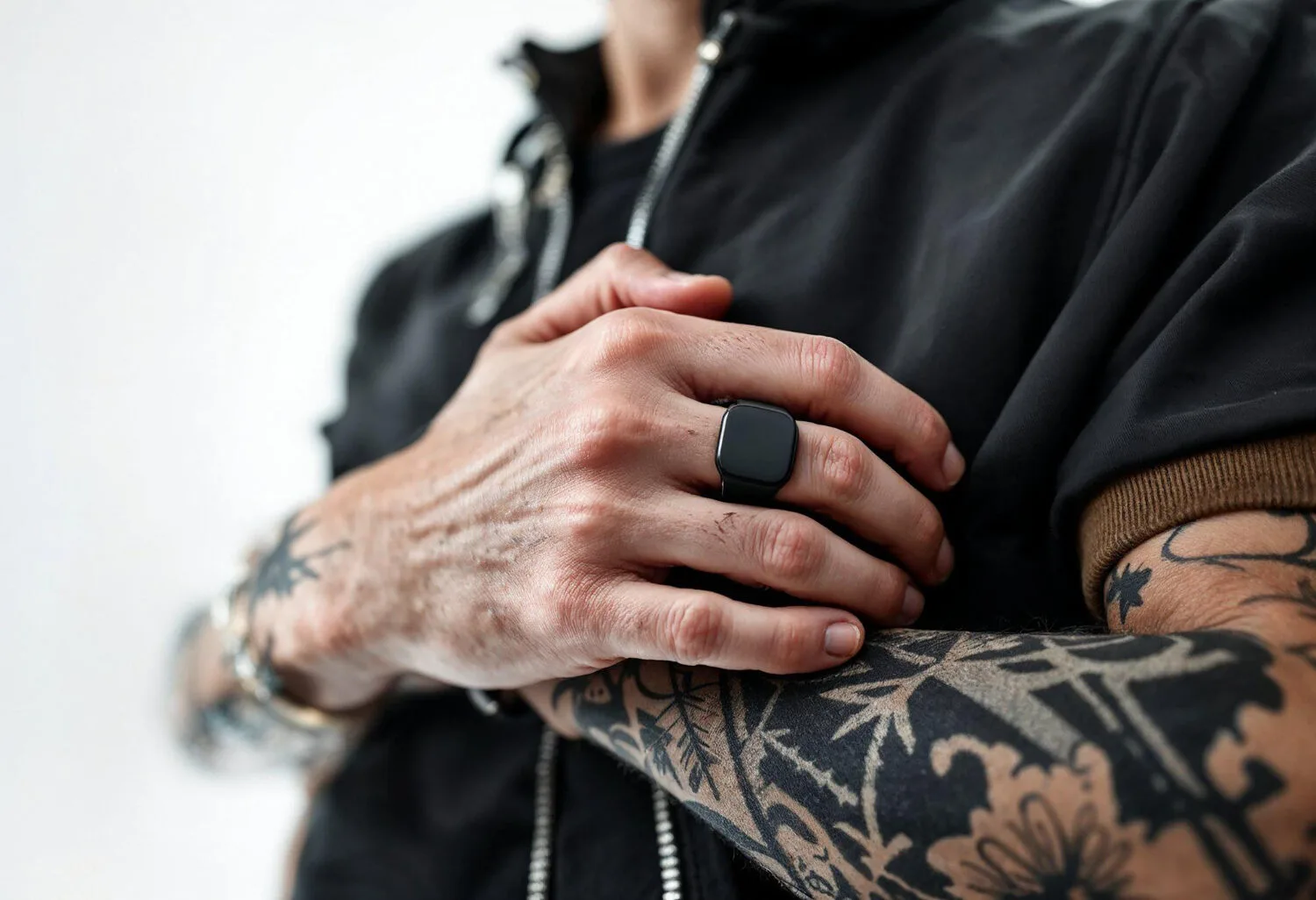
It is difficult to say in a single sentence how a tattoo will look after 30 years. Because a tattoo does not “age alone”; it ages with the skin. Over time, the skin loses elasticity, sagging increases in some areas, and fine lines become more pronounced. On the ink side, lines may soften, tones may become dull, and contrast may decrease. This change does not always result in a bad outcome. Some tattoos look more “settled” as they age.
The factors that determine the outcome are usually very simple: the area where the tattoo is located, sun exposure, weight fluctuations, the tendency of the skin to dry, and the style of the design. Very fine lines and very low contrast works tend to “silhouette” more quickly over the years. More balanced line thicknesses and clear compositions withstand time better.
When dissatisfaction occurs over time, it is not always necessary to consider a sharp option like “removal.” Sometimes a small retouch is enough; sometimes a cover-up that transforms the old work into a new composition is a more sensible way. It is sufficient to start by understanding the areas where the tattoo changes the fastest.
In Which Areas Do Tattoos Deteriorate More?
The question “where does a tattoo deteriorate more?” is actually “which area changes more?” Gravity affects, but it is not the only factor. Folding, friction, muscle movement, sun exposure frequency, and weight changes all work together.
In general, the areas most prone to change are:
Areas that are constantly folding and wrinkling (like around the elbow)
Areas with thin skin and delicate texture (such as the inner arm)
Areas exposed to a lot of sun and friction (such as areas close to the wrist)
When looking at the arm in particular, a practical picture emerges. The outer part of the upper arm is a more stable area for most people. The forearm, due to its visibility, gets more sun exposure; if well-protected, it still carries well in the long term. The inner arm, having a softer texture, may show softening more quickly in fine works. In areas close to the elbow, lines may become more quickly “illegible” due to folding.
When indecisive about placement, adapting the design according to the arm form and skin structure makes a difference in the long term. When a suitable choice is made for the area, the tattoo appears more “stable”; that is, even years later, its shape and composition remain more understandable.
3 Criteria to Facilitate Placement Choice from a 30-Year Perspective
When some questions are clarified from the beginning, surprises decrease years later:
Will the tattoo remain exposed, or will it be covered most of the time?
Will the chosen design be understandable from a distance, or does it require close detail?
Is the area constantly moving, or is it relatively stable?
The answers to these questions also guide the “style” choice. For instance, small writings and micro details may be riskier in mobile areas.
What is Pigment Dispersion (Blowout) and How is it Prevented?
A blowout is an appearance caused by the unwanted dispersion of pigment in the skin. It may look like the edges have lost clarity and sometimes gives a “bleeding ink” feeling. Although blowout is often believed to happen “over the years,” it is generally more closely related to the quality of application.
Natural aging and blowout are not the same. In natural aging, lines gently soften over the years, and tones may become dull. Blowout, however, creates an unwanted spread appearance mostly at the edges.
The main conditions that can increase blowout risk:
Working on thin-skinned or bony areas
Choosing excessively fine lines unsuitable for the area
Incorrect application depth
Excessive irritation and stress during the healing period
From a prevention standpoint, the most advantageous thing for the user is to consider “how the design will look in real life” from the outset. Micro details that look very clear on screen may not retain the same clarity on the skin and over the years. This is not a flaw, it’s biology.
The strongest way to reduce blowout risk is to work with a technique suitable for the area and at the correct depth. Therefore, expectation clarity before application, sizing of the design, and area selection directly affect the tattoo result.
Age Spots and Tattoo Compatibility
As age progresses, irregularities and spotting in skin tone may be seen. This affects the “compatibility” of the tattoo in two aspects: color perception and contrast need. The same black tone can be perceived at different intensities on different skin tones. As spot intensity increases, works with low contrast may become harder to distinguish.
Here, the most confusing issue is: “Can you tattoo over spots?” There is no single answer to this question. The intensity, prevalence of the spot, and the overall condition of the skin are determinants. If the contrast of the design is well-adjusted, tone differences appear more in “balance.” Very light-toned and pastel works may seem to disappear more quickly on certain skins.
There is one point to pay attention to in this section: If there are new, rapidly changing, or suspicious-looking spots on the skin, it is the safest approach to consult dermatology first. Skin health comes before tattoo aesthetics.
Ways to Keep the Tattoo "Fresh": Anti-aging and Sun Protection
The “fresh” appearance of a tattoo in the long term is largely a matter of habit. The “anti-aging” approach here is not to promise miracles; it is to reduce factors that wear out the skin. The two major headings are the sun and the skin's barrier balance.
The sun can gradually reduce the tones of the tattoo and decrease contrast. This effect is more pronounced in areas that are exposed. When the skin dries out, the tattoo appears more matte; this can create a feeling that the “tattoo has deteriorated.” However, often when the moisture balance is restored, the appearance improves.
Simple habits that support the more vivid appearance of the tattoo:
Considering sun protection as regular, not seasonal
Avoiding routines that excessively dry out the skin
Reducing friction that constantly irritates the tattoo area
Managing weight fluctuations as much as possible
Another point is this: As the skin texture changes with age, the need for contrast may increase. Therefore, those who initially choose very thin and low contrast designs may feel the need for retouching earlier as years go by. Here, the “best” choice is a balanced design that suits the individual's style and life but can also withstand time.
A skincare routine supports the appearance of the tattoo while also maintaining the overall health of the skin. Similarly, regular care can also increase healing comfort in newly done piercing areas. Ultimately, in both applications, the balance of the skin is determinative.
Frequently Asked Questions (FAQ) About Tattoo Care on Aging Skin
Do Tattoos Spread as They Age?
Over time, lines may soften and contrast may decrease. This change is often part of the natural aging process.
How Many Years Does It Take for a Tattoo to Fade?
It varies depending on the person, area, and sun exposure. Fading may be noticed earlier in exposed areas.
How Quickly Does the Sun Fade a Tattoo?
The effect of the sun is cumulative. In tattoos that are not regularly protected, dulling and loss of tone may become more pronounced.
What is the Difference Between Blowout and Fading?
Fading is the gradual decrease of color and contrast over time. Blowout creates a different appearance with the feeling of unwanted spreading at the edges.
Can Tattoos Be Done on Areas with Age Spots?
The skin tone and intensity of the spot are determining factors. For harmony, the contrast and placement of the design should be more carefully planned.
